
On a visit to York Minster, I made my way through the nave and found a stairway leading into the crypt. Of course I would be drawn to the crypt! There were incredibly detailed carved capitals on the pillars holding up the low, vaulted ceiling. The crypt itself was very small, though the area beneath the nave had been excavated at various stages in the minster’s long history, and featured Norman and Roman architecture, the latter protected beneath reinforced glass.

It was during my look around the crypt and undercroft museum that I got the most pleasant surprise. I walked around a column and got an eyeful of the Doom Stone. I had read about the stone while researching my trip to York, and had believed that it was not on view as there was some restoration happening in the area around the choir, which is directly above the entrance to the crypt. The stone itself is dramatically lit, and sat off to the side a bit and I noticed that many people did not stop to spend much time with it. Perhaps they found the subject matter to be more than they could handle.
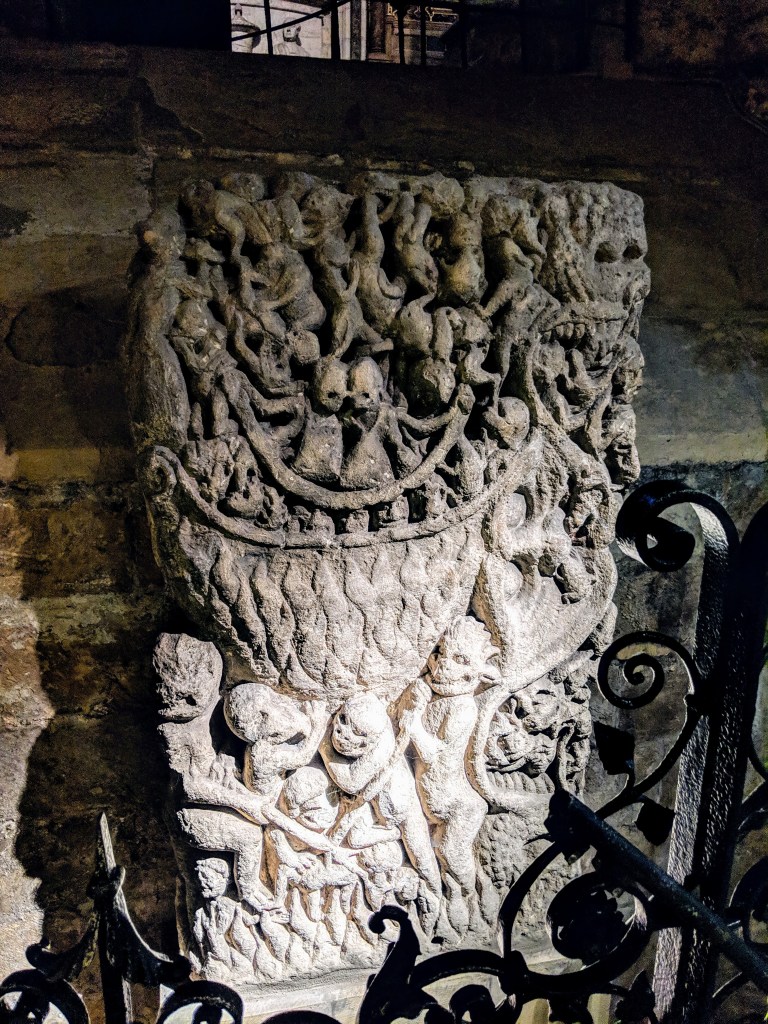
The Doom Stone is an incredible survivor of the Norman era, generally accepted as the time between the so-called conquest in 1066 and 1154, when the line of succession was called into question and the kingdom was thrown into Civil War. In fact, over the next thousand years there were a number of incredible wars, plagues, battles, and various turmoil that it’s a wonder anything survives. This stone however is an incredible feat of artistry and I’ve never seen anything of this period to have such great detail (not saying it doesn’t exist, but I haven’t come across it).
Though I know the wear is due to the 1,000 plus years that have passed since it was carved. I can also imagine hundreds of thousands of people over the years sheepishly running their hands over certain parts, perhaps some daring young one might even touch the face of one of the many demons or is it the devil himself? The subject matter, according to the plaque that went along with it is, “Hell’s Cauldron, or the Mouth of Hell.”


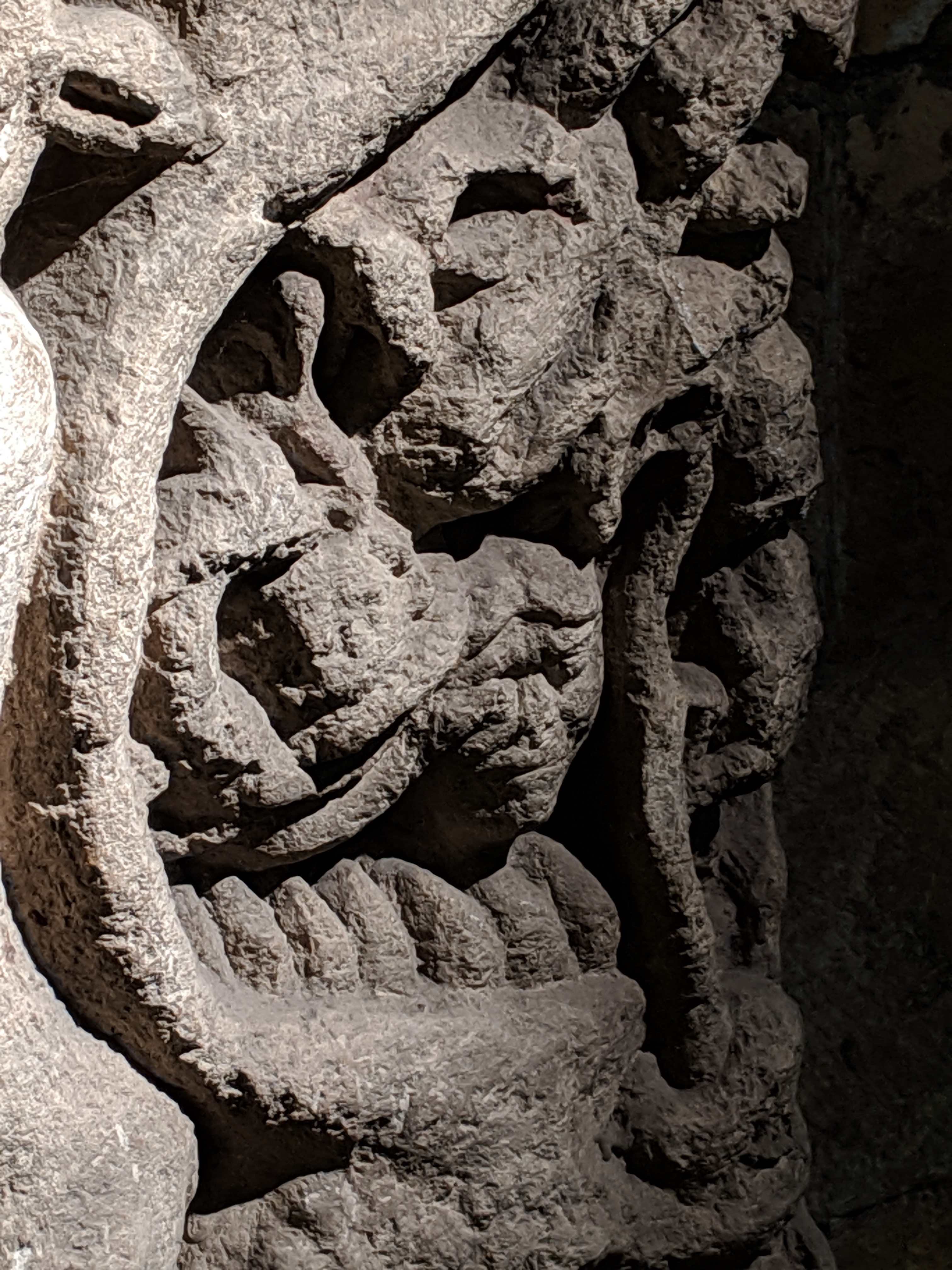

Spending any amount of time staring at the stone produces a sense of uneasiness, which had me wondering what it must have been like for people of it’s day. As a modern woman, drawn to darker things, and totally unsusceptible to the threat of hell (of this sort), I could feel the powerful vibe radiating off this thing. The gruesome characters, with hollow eyes and gaping mouths, I imagine the contents of this scene haunted more than a few parishioners over the years.
I enjoyed some time alone with the stone as the other patrons in the crypt seemed to evaporate as I made my way to the Doom Stone. The stone is well-worth the visit to the Minster, as is the minster a delightful and jaw-dropping experience in and of itself. I can’t recommend it enough. While there is a fee to enter the Minster, the entry costs go to the upkeep of the stone. It’s a thrilling window to the Norman approach to Christianity and despite its religious message, it is a beautiful and expert work of art. You can find more details about the Doom Stone here.
York Minster is an operating cathedral, hosting worshipping services, so please make sure to check their website to ensure that you can enter, and the Understory Museum is where the stone is located, so make sure you refer to their separate hours to avoid disappointment.
 Cloister Wynd